Home/Industries/Logistics
Logistics software development company
Avaib builds custom logistics software — transport and warehouse management, fleet and route optimisation, real-time tracking and the carrier, EDI and telematics integrations that connect them — shaped around how your operation actually moves freight. Senior specialists, code you own, at a cost-effective rate.
Delivered for operators in Australia, the United States, Canada and the Middle East.
Software that keeps the operation connected
Logistics software development means building software around how your operation really moves freight — your order channels, routes, warehouse flow, fleet and the carriers and systems you already run — so it supports the work instead of forcing your team to fit a generic tool.
In too many operations the systems do not talk. The TMS says one thing, the warehouse another, the ERP a third and the carrier portal a fourth, so staff open five screens and reconcile the differences by hand. Planners spend the day stitching conflicting numbers together in spreadsheets instead of optimising loads and routes, and nobody can tell a customer exactly where their freight is.
Avaib closes that gap. We put senior people who understand both freight operations and integration on your project, design around one connected source of truth, and wire the systems a shipment touches into a single live picture. One accountable team, code you own, at a cost-effective senior rate.
Tired of your team reconciling five systems by hand instead of running the operation? That is exactly the gap we close.
Get a free quoteWhat we build for logistics
From the loading dock to the customer’s phone, we build the software that keeps freight moving and everyone in the loop. Some of it is custom-built, some extends what you already run.
Custom TMS built around how you actually plan, dispatch, rate and settle freight — or the missing pieces around the platform you already run — so planners stop juggling spreadsheets to fill the gaps.
Receiving, put-away, picking, packing and stock control shaped around your real warehouse layout and flow, wired to the systems upstream and downstream so inventory numbers stop disagreeing.
Route planning, dispatch, driver assignment and fuel and vehicle tracking that replace phone-and-spreadsheet dispatch, so the right vehicle takes the right load on the shortest sensible route.
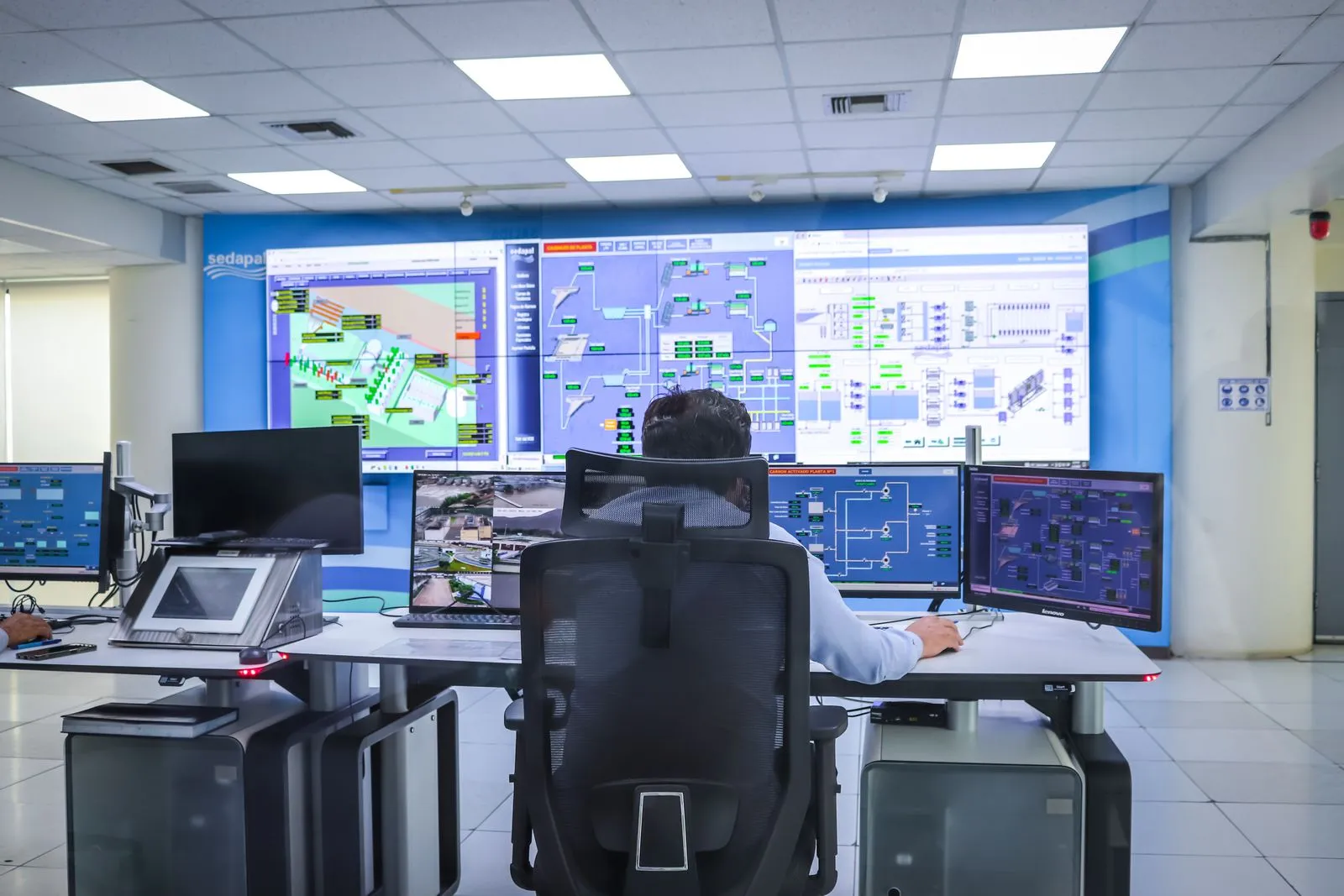
A control-tower view that pulls telematics, carrier feeds and scan events into one live picture, so your team and your customers can answer "where is my order" without a phone call.
Connect carrier APIs, rating engines, 3PL partners and EDI trading partners so quotes, bookings, labels and status updates flow automatically instead of being re-keyed between portals.
Apps for drivers (manifests, navigation, proof of delivery, exceptions) and for customers (booking, live tracking, documents) that live inside your systems rather than stranding data in a separate tool.
Not sure which of these you need first? Tell us where it hurts most and we will tell you where to start.
Get a free quoteWhy logistics software goes wrong
This is how a capable, hard-working operation still ends up flying half-blind. It is the most common way logistics systems fall short, and everything about how Avaib builds is designed to avoid it.
A truck rolls, a container ships, a pallet is scanned — but the update lands in one system and never reaches the others. By the time the data catches up, the situation on the ground has already changed again.
The TMS says one thing, the WMS another, the ERP a third, and the carrier portal a fourth. Nobody trusts a single screen, so staff open five and reconcile the differences by hand.
Instead of optimising loads and routes, the team stitches conflicting numbers together in spreadsheets. It is a structural drain no amount of extra staffing fixes, because it is an architecture problem, not a people problem.
Operations teams do not lose control because they lack effort. They lose it because the information arrives after the freight has already moved on. Connect the systems into one live picture, and the software starts giving control back instead of taking it.
What good looks like
When the systems agree and the data keeps up with the freight, the whole operation gets calmer and faster. Here is what that changes.
Telematics, carrier feeds, warehouse scans and order data flow into a single control-tower view, so your team works from one screen that reflects what is really happening right now.
We wire your TMS, WMS, ERP and order systems together so a status changes once and updates everywhere, and the endless reconciliation between screens simply goes away.
Route and load planning, driver assignment and exception handling built to run at volume, so growth does not mean hiring more people to manage spreadsheets.
Live tracking and proactive alerts mean your team and your customers can see where an order is and when it will arrive, without a chase-up call to the depot.
Delays, failed deliveries and stock mismatches are flagged the moment they happen, so your team acts on them early instead of discovering them in a report the next day.
The code, the data and the integrations stay yours, so your operation is never held hostage by a platform vendor you cannot leave without losing the wiring that runs your business.
Where logistics projects are won or lost
A logistics platform never lives alone. A single shipment touches all of the systems below, each with its own format and failure mode. The value is not another silo — it is the control-tower layer that connects them into one live source of truth.
Orders, invoicing, costs
Stock and scan events
Rates, bookings, labels
Vehicle and driver data
3PLs, shippers, retailers
Tracking and documents
Where visibility breaks, and where we fix it
Visibility usually breaks at predictable points along an order’s life. Here is where the gaps open up, and what the software gives back at each stage.
Orders arrive by email, portal and phone and get re-keyed by hand.
Capture and rate every order in one place, whatever channel it came from.
Loads and routes are planned on a whiteboard or spreadsheet.
Plan loads and routes automatically, assigning the right vehicle and driver.
Once it leaves, visibility drops until someone phones the driver.
Live tracking from telematics and carrier feeds, on one control-tower view.
Delays and failures are found late, often after the customer complains.
Problems flagged the moment they happen, so your team acts early.
Proof of delivery lives on paper or in a driver’s separate app.
Digital proof of delivery captured in the app and synced straight back.
Freight billing is reconciled by hand against carrier invoices.
Charges, costs and invoices reconciled automatically against the record.
The concerns, answered
These are the real concerns we hear before a logistics project starts. Here is exactly how Avaib takes each one off the table.
Why Avaib
Plenty of teams can write code. Fewer treat integration and the operational edge cases as the main event before they start. Our model is built to bring both to your operation.
Since 2004 and more than 600 projects, including transport, warehouse, tracking and fleet systems, so the messy reality of logistics is understood before the build starts.
We put senior people on the connections first, because that is where logistics projects usually fail — TMS to carrier APIs, WMS to ERP, tracking to telematics — built against how those systems really behave.
A control-tower view that stays accurate under real volume and real failure modes, so the single screen your team relies on actually reflects what is happening on the road.
Senior engineers from around USD 25 per hour, the same capability Australian, US, Canadian and Middle-East firms charge a fortune for, at a fraction of the price.
Our senior engineers use advanced AI coding tools to move through the build faster, directing and reviewing every step, so your logistics software ships sooner without cutting corners on the edge cases that matter.
One senior team owns your build end to end, tested by a dedicated QA department against real freight scenarios and backed by a 30-day warranty, so nothing important slips through under deadline pressure.
The code, the data and the integrations stay yours, so the software and the wiring that run your logistics business are yours to run, extend or move, with no vendor lock-in.
Want a development partner that understands freight and the integrations underneath it, without the enterprise price tag?
Get a free quoteHow we work
Understand how freight really moves first, design around integration, agree a clear plan, build and test it on real logistics scenarios, then roll out and keep it moving.
We start with how freight really moves through your operation — your order channels, routes, warehouse flow, the systems and carriers you already run, and where the data breaks — so nothing important is discovered late.
We map every system a shipment touches and design the connections and the single source of truth up front, rather than building features and bolting the integrations on at the end where projects usually fail.
You get a plain-English scope with defined outcomes and a fixed price, so you know what will be built, in what order and what it will cost before any development starts.
We build in slices, each tested by our dedicated QA department against real logistics scenarios — split loads, exceptions, failed deliveries — so your team sees working software early and the hard cases are caught before they hit the road.
We help you go live carefully, support the system under a 30-day warranty and beyond, and keep it current as your routes, carriers, volumes and integrations change.
Pricing
Senior engineers from around USD 25 per hour, the same capability Australian, US, Canadian and Middle-East firms charge a fortune for, at a fraction of the price. We scope the work clearly up front so you get a fixed, plain-English quote, and every engagement leaves you owning your code, data and integrations outright.
For a clearly scoped TMS, WMS, tracking or fleet system, we agree the scope, the outcomes and the price up front, then build and prove it against your real freight flows.
A senior team that understands logistics and your systems, working as an extension of yours, that you can scale up or down as routes, volumes and priorities shift.
Where a packaged platform nearly works, we build the custom pieces and the carrier, EDI or telematics integrations that make it match how your operation actually runs.
Every project is delivered by senior specialists under one accountable team, tested by a dedicated QA department against real freight scenarios, backed by a 30-day warranty — and you keep the code, data and integrations with no lock-in. Not sure whether to build, extend or buy? We will give you an honest recommendation on a free scoping call and send you a free, no-obligation written estimate with a clear scope.
Want a clear read on what software for your operation should cost and where to start?
Get a free quoteGet an honest read on the best route for your operation, a clear scope and a ballpark price, free and with no obligation.
Get a free quoteWho we help
If off-the-shelf software keeps falling short of how your operation really works, here is the kind of operator Avaib fits, and the problem we usually solve for each.
Technologies & standards
We are not tied to one vendor's stack. We choose and combine the right tools for your operation, work with the systems and carriers you already run, and build to the standards logistics depends on. Here is the landscape we work in.
In our clients' words
Rated 4.5/5 on Google and 5/5 across other platforms, with 10+ written references and 80%+ client retention.
"We have dealt with Avaib as our sole software provider for over 9 years now with very few issues. I would recommend their services anytime."
"Avaib understood our needs and have been catering customised solutions that have exceeded our expectations."
"Round-the-clock availability of business managers and IT teams is one of Avaib’s greatest assets. They have always surpassed my expectations. I highly recommend Avaib to everyone."
Common questions
Logistics software development is the practice of building custom software shaped around how a specific operation actually moves freight — its order channels, routes, warehouse flow, fleet and the systems and carriers it already runs — rather than forcing a business to fit a generic tool. It covers transport management systems (TMS), warehouse and inventory systems (WMS), fleet and route optimisation, real-time tracking and supply-chain visibility, and the carrier, EDI and telematics integrations that connect them.
The part that decides success is usually integration: a logistics platform almost never lives alone, so a TMS has to exchange data in real time with a WMS, an ERP, carrier rate engines and telematics, each with its own format and failure mode. Avaib has delivered software across more than 600 projects since 2004, including transport, warehouse, tracking and fleet systems, so the operational reality of logistics is understood before the build starts.
Because in logistics the feature is rarely where projects break — the connections are. A single shipment touches order systems, a TMS, a WMS, an ERP, telematics devices, carrier APIs and often EDI trading partners, and each of those speaks a different format and fails in a different way. When the integrations are treated as an afterthought, the data drifts out of sync and the whole platform loses trust.
We design integration-first: we map every system a shipment touches at the start, build a single source of truth, and test the connections against how those platforms actually behave in production. That is why we put our senior people on the wiring before the features.
Yes. Most of the value in logistics software comes from connecting the systems that already hold pieces of the operation — your TMS, WMS, ERP and order systems, plus telematics, carrier APIs and rating engines and any EDI trading partners — so a status changes once and updates everywhere instead of being re-keyed between portals.
We work with the standards logistics runs on, including EDI (X12 and EDIFACT), carrier and rating APIs and telematics feeds, and we build against how these systems behave in a live setting, so the integration holds up under real freight volume rather than only in a demo.
It depends on how much of your operation a packaged product genuinely covers. Off-the-shelf TMS and WMS handle the common ground, but rarely fit the specific freight types, routes, warehouse layout and rules that make your operation yours, which shows up as workarounds, spreadsheets and staff reconciling systems by hand.
Where a packaged product almost fits, the smart move is often to extend and integrate it rather than replace it. Where the gap is too wide, custom logistics software gives you a system that matches how you really run. We help you decide honestly which route fits your operation and your budget.
We pull the signals that already exist — telematics and GPS from vehicles, status feeds from carriers, and scan events from the warehouse — into one control-tower view, so your team works from a single live picture instead of opening five systems and reconciling the differences.
From that same picture we expose the right slice to your customers through a portal or app, so they can see where an order is and when it will arrive. Exceptions such as delays or failed deliveries are flagged the moment they happen, so your team acts early rather than discovering the problem in tomorrow’s report.
It depends on the scope, since a single focused tool — say a driver app or one carrier integration — is very different from a full TMS or WMS with many integrations. That is why we scope the work clearly up front and give you a fixed, plain-English quote before any development starts, so there are no open-ended surprises.
Our senior engineers work at a cost-effective rate of around USD 25 per hour, the same capability Australian, US, Canadian and Middle-East firms charge a fortune for, and AI-accelerated delivery helps get you there faster. After a short conversation we will send you a free, no-obligation written estimate with a clear scope.
The edge cases are the heart of logistics software, not an afterthought — split and partial loads, multi-leg routes, failed drops, re-deliveries, carrier exceptions and returns all have to be handled cleanly or the data breaks. Because our senior specialists have built transport, warehouse and tracking systems before, those cases are designed in from the start.
Our dedicated QA department tests every release against real scenarios like these, not just the happy path, so the awkward cases are caught in testing rather than discovered on the road.
Yes, completely. You own the code, the data and the integrations throughout, so the logistics platform you paid for, and the wiring that connects it to your carriers and systems, are yours to run, extend or move to another team whenever you choose.
Our work is backed by a 30-day warranty and ongoing support if you want it, but you are never locked in. The relationship continues because it keeps delivering value in your operation, not because leaving would cost you the software that runs your freight.
Got a question that isn't here? Ask it on the quote form, we answer every one.
Get a free quoteExplore more
Logistics systems are built from these. Explore the parts that fit your situation, or let us map the whole thing with you.
Software built around the rules and reality of your sector, across every industry we work in.
Learn more →The custom software behind most TMS, WMS, tracking and fleet systems, built to fit exactly how your operation runs.
Learn more →Connect carriers, EDI partners, telematics and your ERP so freight data flows automatically instead of being re-keyed.
Learn more →Bring an ageing logistics platform onto modern, scalable foundations that hold up under real freight volume.
Learn more →Put AI to work on route optimisation, demand forecasting and exception handling, with a human in the loop.
Learn more →Turn freight, fleet and warehouse data into dashboards your team can trust and act on.
Learn more →Book a free consultation. No jargon, just an honest read on the best route for your operation and a clear path to get there.
Get a free quote