
Home/Industries/Healthcare
Healthcare software development company
Healthcare software development built around care, not the billing screen.
Avaib builds custom healthcare software — clinical and EHR systems, patient portals, telehealth and the HL7 and FHIR integrations that connect them — shaped around how your clinicians actually work, with HIPAA-grade privacy and security built in. Senior specialists, code you own, at a cost-effective rate.
Delivered for providers in Australia, the United States, Canada and the Middle East.
Software that fits the clinic
Your clinicians did not train for years to spend their day clicking through screens.
Healthcare software development means building custom software around how your providers really deliver care — your clinical workflow, your patients, your records and the standards you have to meet — so it supports the work instead of forcing your team to fit a generic tool.
In too many clinics the software was built for billing and coding first, and the exam-room reality second. Clinicians spend up to two hours on the record for every hour with patients, documentation spills into personal time, and staff quietly invent workarounds until the chart no longer matches what really happened. Meanwhile the record itself lives across an EHR, the labs, imaging and pharmacy that never quite agree. A well-designed mobile app for clinical staff can claw back hours every week.
Avaib closes that gap. We put senior people who understand both clinical workflow and compliance on your project, design around the way care is actually delivered, and connect the systems that hold the record. Where AI solutions can safely reduce documentation burden, we build them in. One accountable team, code you own, at a cost-effective senior rate.
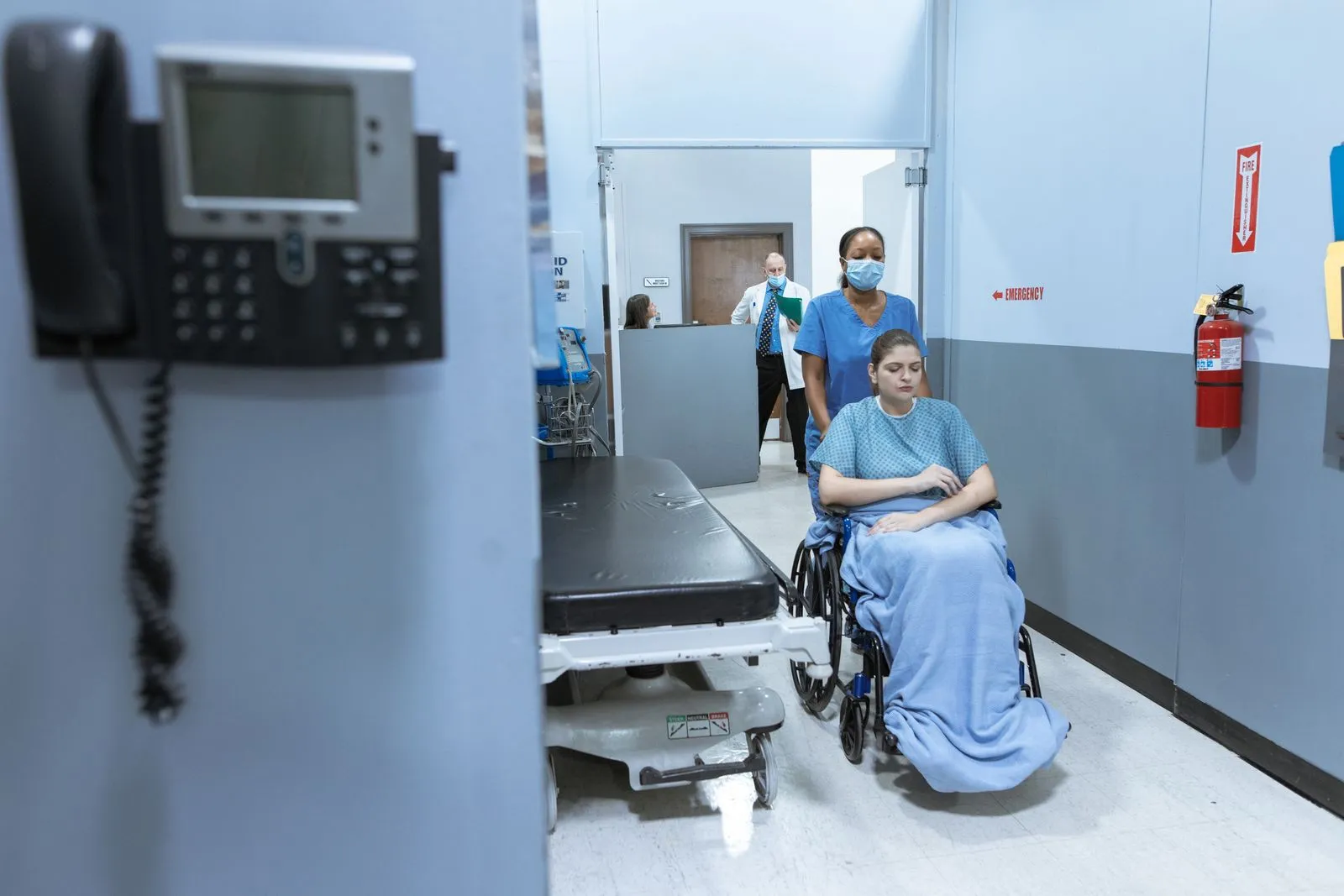
Tired of software that fights your clinicians instead of helping them? That is exactly the gap we close.
Get a free quoteWhat we build for healthcare
The systems that run a modern practice.
From the clinical chart to the patient’s phone, we build the software that keeps a healthcare provider connected and compliant. Some of it is custom-built, some extends what you already run.

EHR / EMR & clinical systems
Custom electronic health and medical record systems, or the extra pieces around the one you already run, shaped around how your clinicians actually chart, order and review — not around a billing screen.

Patient portals & mobile apps
Booking, forms, results, messaging and reminders that patients actually use, so your front desk stops fielding the same calls and patients stay engaged between visits.

Telehealth & remote care
Video consults, remote monitoring and follow-up built into your workflow and your records, rather than a disconnected app that leaves notes stranded outside the chart.

Practice & clinic management
Scheduling, intake, referrals, billing and reporting for a practice, clinic or allied-health group, built around your real appointment types, providers and rules.

Integration & interoperability
Connect your EHR, labs, imaging, pharmacy and billing using HL7 and FHIR, so a patient’s record stops living in six systems that each tell a slightly different story.

Compliance, security & audit
PHI handling, encryption, role-based access and audit-ready logging built in from the first line of code, so privacy and compliance are part of the design, not a scramble before go-live.
Not sure which of these you need first? Tell us where it hurts most and we will tell you where to start.
Get a free quoteWhy clinical software goes wrong
Built for the billing office, not the exam room.
This is how a clinic full of dedicated people still ends up fighting its own software. It is the most common way healthcare systems fall short, and everything about how Avaib builds is designed to avoid it.
The software is built around billing, not care
Most clinical systems are designed first to capture codes, claims and admin. The exam-room workflow — how a clinician actually thinks through a visit — comes second, so the screen fights the way care is really delivered.
Every visit turns into data entry
Clinicians click through screens built for someone else’s report, spending up to two hours on the record for every hour with patients. The documentation lands after clinic, on personal time, and the burnout climbs.
People work around it, and the record suffers
When software gets in the way, staff invent shortcuts, copy-paste notes and keep side spreadsheets. The chart drifts from reality, data quality drops, and the very system meant to help now hides the truth.
Clinicians do not resist software because they dislike technology. They resist it because it was built around a claim form instead of a consultation. Design it around care, and the tool starts giving time back instead of taking it.
What good looks like
Software your clinicians actually want to open.
Picture documentation finished in the room, the record telling one true story, and clinicians ending clinic on time instead of charting at home. When the software fits the way care is delivered, that is what a day starts to feel like. Here is what that changes.
Designed around the clinical workflow
We shape the screens around how your clinicians actually work a visit — the order they think in, the fields they truly need — so the software helps the encounter instead of interrupting it.
Fewer clicks, less after-hours charting
We cut the busywork down to what matters, with sensible defaults and fast entry, so documentation gets done in the room and less of it follows your team home at night.
Clinicians in the room from day one
Real doctors, nurses and admin staff shape the design as we build, not just at a sign-off meeting, so the finished software fits the people who live in it all day.
One connected patient record
EHR, labs, imaging, pharmacy and billing wired together with HL7 and FHIR, so a patient’s history is one trustworthy picture instead of six systems that disagree.
Privacy and compliance built in
PHI protection, access control and audit trails are part of the design from the start, so security is a foundation rather than a patch applied under deadline pressure.
Software you own outright
The code, the data and the documentation stay yours, so your clinical system is never held hostage by a vendor you cannot leave without losing your records.
Where the record actually lives
One patient, six systems that don’t talk.
A single patient’s history is scattered across the systems below, each in a slightly different format. The value is not another silo — it is the standards layer that finally connects them.
The clinical chart
Orders and results
Scans and reports
Medications and scripts
Codes and payers
Bookings and messages
Compliance and security
Built to the rules healthcare lives by.
In healthcare, privacy and compliance are not features to add at the end. We build to the standard your jurisdiction requires and bake the safeguards in from the first line of code.
Standards we build to
HIPAA (United States)
PHI handling, the Privacy and Security Rules, and breach-ready processes built into US healthcare software from the design stage.
Privacy Act & My Health Record (Australia)
Australian Privacy Principles and My Health Record connection rules honoured for practices and clinics operating here.
PHIPA and provincial law (Canada)
Provincial health-privacy requirements respected for Canadian providers, so patient data is handled the way the regulator expects.
HL7 & FHIR interoperability
The standards that let your systems exchange records reliably, built the way real EHR platforms behave in production, not just in a sandbox.
Safeguards baked in
Encryption in transit and at rest
Patient data protected on the wire and in storage as a default, not an add-on.
Role-based access control
People see only what their role allows, with the least-privilege rule applied throughout.
Audit-ready logging
Who saw or changed what, and when — recorded so an audit is a query, not a crisis.
Consent and data residency
Patient consent tracked, and data kept in the region your rules require it to stay in.
The concerns, answered
What worries healthcare providers about a custom build, and how we handle it.
These are the real concerns we hear before a healthcare project starts. Here is exactly how Avaib takes each one off the table.
Why Avaib
Why choose Avaib for healthcare software development.
Plenty of teams can write code. Fewer understand clinical workflow and the compliance surface underneath it before they start. Our model is built to bring both to your clinic.
Two decades building for regulated work
Since 2004 and more than 600 projects, including clinical, patient-facing and integration systems, so the compliance and workflow reality of healthcare is understood before the build starts.
Clinical workflow before screens
We design around how clinicians actually deliver care, not around a billing report, so the software supports the visit instead of stealing time from it.
Interoperability done properly
HL7 and FHIR integration built against how EHR, lab and imaging systems really behave in production, so a patient’s record finally becomes one connected, trustworthy picture.
Senior expertise, without the premium price tag
The same capability Australian, US, Canadian and Middle-East firms charge a fortune for, delivered by senior engineers from around USD 25 per hour.
AI-accelerated delivery
Our senior engineers use advanced AI coding tools to move through the build faster, directing and reviewing every step, so your healthcare software ships sooner without cutting corners on safety or quality.
Compliance and QA built in
PHI protection and audit-ready logging are part of the design, and a dedicated QA department tests every release, backed by a 30-day warranty, so nothing important is missed under deadline pressure.
You own the record
The code, the data and the documentation stay yours, so your clinical system and the patient data inside it are yours to run, change or move, with no lock-in.
Want a development partner that understands the clinic and the regulator, without the enterprise price tag?
Get a free quoteHow we work
From shadowing your clinic to software that fits it.
Understand how care is really delivered first, design for the clinician and the regulator, agree a clear plan, build and test it safely, then roll out and keep it compliant.
Shadow the clinic and map the care flow
We start with how care is really delivered — your appointment types, clinical workflow, the systems and standards you already run, and the compliance rules that apply — so nothing important is discovered late.
Design for the clinician and the regulator
We shape the software around the clinical workflow and design compliance, PHI handling and interoperability in from the outset, rather than bolting privacy and integration on at the end.
Agree a clear, prioritised plan
You get a plain-language scope with defined outcomes and a fixed price, so you know what will be built, in what order and what it will cost before any development starts.
Build, test and prove it safely
We build in slices, each tested by our dedicated QA department against real workflows and integration data, so clinicians see working software early and problems are caught long before they reach patient care.
Roll out, support and keep it compliant
We help you go live carefully, support the system under a 30-day warranty and beyond, and keep it current as your practice, your integrations and the regulations around you change.
Pricing
Clinic-fit software, without the enterprise price tag.
You get patient systems, clinical tools and portals built around privacy law, consent and the safety-critical detail, for a fraction of what a local firm would quote and with no drop in quality. That works because of how we deliver: senior engineers from around USD 25 per hour bring the same capability Australian, US, Canadian and Middle-East firms charge a fortune for. We scope the work clearly up front so you get a fixed, plain-language quote, and every engagement leaves you owning your code, data and documentation outright.
Fixed-scope build
For a clearly scoped clinical, patient-facing or integration system, we agree the scope, the outcomes and the price up front, then build and prove it against your real workflows.
Dedicated development team
A senior team that understands healthcare and your systems, working as an extension of yours, that you can scale up or down as priorities and regulations shift.
Extend or integrate what you have
Where a packaged clinical system nearly works, we build the custom pieces and the HL7 or FHIR integrations that make it match how your clinic actually runs.
Every project is delivered by senior specialists under one accountable team, tested by a dedicated QA department, backed by a 30-day warranty, with compliance and PHI protection built in — and you keep the code, data and documentation with no lock-in. One Canadian media and broadcasting client cut its development investment by roughly 75% against local vendor quotes and still received the same high-quality solution, backed by that warranty. Not sure whether to build, extend or buy? We will give you an honest recommendation on a free scoping call and send you a free, no-obligation written estimate with a clear scope.
Want a clear read on what software for your clinic should cost and where to start?
Get a free quoteTell us about your practice and what you need to build.
Get an honest read on the best route for your clinic, a clear scope and a ballpark price, free and with no obligation.
Get a free quoteWho we help
Healthcare software for providers that generic tools do not fit.
If off-the-shelf software keeps falling short of how your clinic really works, here is the kind of provider Avaib fits, and the problem we usually solve for each.
Technologies & standards
The platforms, stacks and healthcare standards we build with.
We are not tied to one vendor's stack. We choose and combine the right tools for your clinic, work with the systems you already run, and build to the standards healthcare depends on. Here is the landscape we work in.
In our clients' words
Relationships that last years, not projects.
Rated 4.5/5 on Google and 5/5 across other platforms, with 10+ written references and 80%+ client retention.
"I have nothing but positive things to say about Avaib. We have dealt with his company as our sole software providers for over 18 years now with very few issues. I would recommend their services anytime."
"As a senior product manager, I have worked with a handful of vendors, consultant agencies and development shops. I am confident to say that Avaib is among the best considering the velocity, quality of the work and the overall ROI. The team took ownership, overcame a steep learning curve in a new industry, and delivered promises. We are very thankful for the dedication of the team and would recommend Avaib to any company, large or small, to help with your technical project."
"We partnered with Avaib for custom software, mobile app, and web design & development projects, and the experience was excellent. All solutions were robust, well-structured, and delivered on time. They added real value to our clients' businesses."
Common questions
Healthcare software development, answered.
What is healthcare software development?
Healthcare software development is the practice of building custom software shaped around how a specific provider actually delivers care — its clinical workflows, patient interactions, records and the systems and standards it already runs — rather than forcing a clinic to fit a generic tool. It covers custom EHR and EMR and clinical systems, patient portals and mobile apps, telehealth and remote care, practice and clinic management, and the HL7 and FHIR integrations that connect an EHR to labs, imaging, pharmacy and billing. Running underneath all of it is the compliance and security work — HIPAA-grade PHI handling, access control and audit-ready logging — that healthcare software has to get right.
Avaib has delivered software across more than 600 projects since 2004, including clinical, patient-facing and integration systems, so the compliance and workflow reality of healthcare is understood before the build starts.
Is your healthcare software HIPAA-compliant?
We build to the compliance standard your jurisdiction requires and design it in from the start, rather than treating it as a checkbox at the end. For US providers that means HIPAA — PHI handling under the Privacy and Security Rules, encryption, role-based access and audit-ready logging built into the software itself.
For providers elsewhere we build to the equivalent rules — Australia’s Privacy Act and My Health Record requirements, or Canada’s PHIPA and provincial law. We can walk you through exactly how each requirement is met in the design, so compliance holds up to review rather than being a claim.
Can you integrate with our existing EHR, labs and imaging systems?
Yes. Most of the value in healthcare software comes from connecting the systems that currently hold pieces of the record — the EHR, lab and pathology platforms, imaging and PACS, pharmacy and billing — so a patient’s history stops living in several systems that each tell a slightly different story.
We work with the standards healthcare runs on, including HL7 v2 and FHIR, and we build against how these platforms actually behave in production rather than how their documentation reads, so the integration holds up in a live clinical setting.
Should we build custom or use an off-the-shelf clinical system?
It depends on how much of your practice a packaged product genuinely covers. Off-the-shelf clinical software handles the common ground, but rarely fits the specific workflows, appointment types and rules that make your organisation yours, which shows up as workarounds and clinician frustration.
Where a packaged product almost fits, the smart move is often to extend and integrate it rather than replace it. Where the gap is too wide, custom healthcare software gives you a system that matches how you really work. We help you decide honestly which route fits your clinic and your budget.
How do you make software clinicians actually want to use?
We put real clinical users — doctors, nurses and admin staff — into the design from day one, not just at a sign-off meeting, and we shape the screens around how a visit really flows. That means fewer clicks, sensible defaults and fast entry, so documentation gets done in the room instead of following your team home.
A great deal of clinician burnout comes from software built for billing rather than care. Designing around the clinical workflow, and cutting the busywork, is how we avoid building another system your team quietly resents.
How much does healthcare software development cost?
It depends on the scope, since a single focused tool is very different from a full clinical platform with multiple integrations. That is why we scope the work clearly up front and give you a fixed, plain-language quote before any development starts, so there are no open-ended surprises.
Our senior engineers work at a cost-effective rate of around USD 25 per hour, the same capability Australian, US, Canadian and Middle-East firms charge a fortune for, and AI-accelerated delivery helps get you there faster. After a short conversation we will send you a free, no-obligation written estimate with a clear scope.
How do you protect patient data during the build?
Security is part of the design, not a final review. Encryption in transit and at rest, role-based access, audit-ready logging and consent handling are built in from the first line of code, and we keep data in the region your rules require it to stay in.
Because our senior engineers have built for regulated healthcare before, PHI protection is understood as a foundation rather than discovered late, which keeps both the risk and the rework down.
Will we own the software you build?
Yes, completely. You own the code, the data and the documentation throughout, so the clinical system you paid for, and the patient records inside it, are yours to run, change or move to another team whenever you choose.
Our work is backed by a 30-day warranty and ongoing support if you want it, but you are never locked in. The relationship continues because it keeps delivering value in your clinic, not because leaving would cost you the record.
Got a question that isn't here? Ask it on the quote form, we answer every one.
Get a free quoteExplore more
Related industry expertise.
Explore the rest of our industry expertise — and the hub they all connect to.
Software for Construction
Estimating tools, field apps and platforms built for how jobs really run.
Learn more →Software for Education
Learning platforms, student systems and assessment tools built for how you teach.
Learn more →Software for Logistics
TMS, WMS, tracking and fleet systems built for real freight volume.
Learn more →Software for Manufacturing
Production, inventory and quality systems built for the shop floor.
Learn more →Software for Professional Services
Practice, PSA and time-and-billing platforms built for how your firm earns.
Learn more →Software for Retail
POS, inventory and order-management platforms built for how you trade.
Learn more →Industry Software Development
Software built around the rules and reality of your sector.
Learn more →Let's build software that fits your clinic.
Book a free consultation. No jargon, just an honest read on the best route for your practice and a clear path to get there.
Get a free quote